
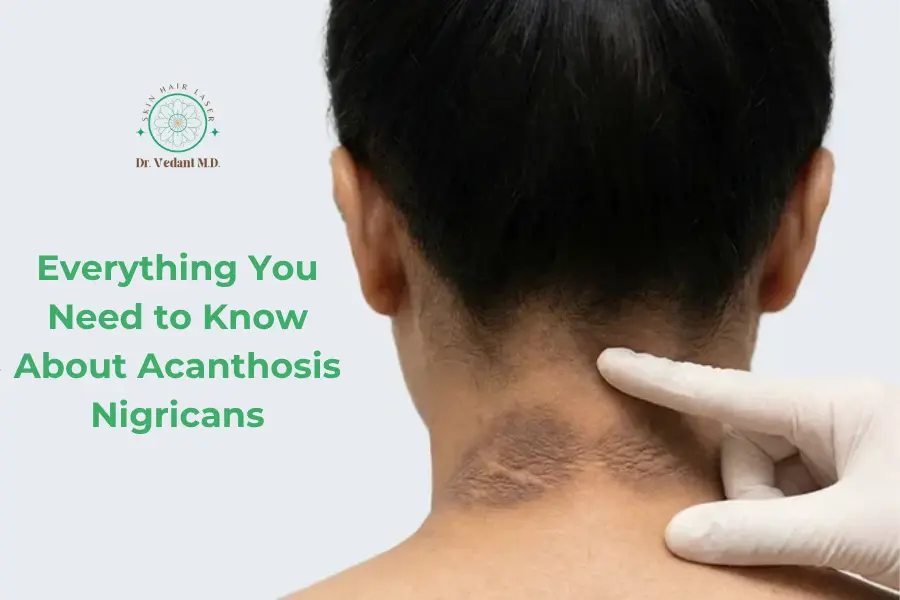
Have you ever experienced dark and velvety patches on the neck that don’t fade even after scrubbing or cleaning? These changes may be signs of a skin condition known as Acanthosis Nigricans. It is a treatable skin disorder that is more than a cosmetic concern. The dark patches usually appear on the skin folds of the armpits, neck, under the breasts, and groin, and may be an indicator of insulin resistance or other metabolic disorders.
The light brown to black spots are often blamed on poor hygiene; however, many people don't know what Acanthosis Nigricans really is.
In this blog, Dr Vedant Ghuse, an experienced dermatologist in Ghatkopar and Chembur, explains the causes, the appearance, the diagnosis, and the treatment to help you understand the condition and recognise when it may be time to seek professional evaluation.
One of the common associations with Acanthosis Nigricans is insulin resistance. When the body doesn’t respond as required to insulin, the insulin levels may increase. Higher insulin levels can bring about changes in the skin cells, contributing to darkening and thickening of the skin.
The other conditions that are commonly associated with Acanthosis Nigricans are obesity, hormonal conditions, prediabetes, type 2 diabetes, and other underlying conditions. The root cause can differ from person to person, which is why complete medical evaluation is crucial.
The most visible sign is velvety, dark skin that appears especially in body folds. If untreated, the skin gradually becomes thicker and the pigment more prominent.
Dr Vedant Ghuse, the top skin specialist doctor near me, explains that excessive scrubbing of the skin to reduce dark patches can irritate the skin without treating the underlying condition.
A dermatologist can identify Acanthosis Nigricans through physical examination and studying your medical history. If any underlying conditions like prediabetes, insulin resistance, or others are suspected, the doctor will recommend running some tests or refer you to other specialists.
Identifying the root cause and treating the condition can help improve the skin changes over time.
Yes; however, the underlying cause defines the treatment. Lifestyle changes and appropriate medical care are recommended by experts if Acanthosis Nigricans is caused by insulin resistance. This combination can help improve the skin’s appearance
A dermatologist may also recommend topical creams and treatments based on the severity and individual needs.
If you notice new and unexplained dark patches, especially in the areas around your neck, armpits, or groin, it is important to get them checked. Early assessment can help identify the underlying cause, and timely treatment can help manage the symptoms effectively.
If you are concerned about Acanthosis Nigricans or persistent black patches, search for the best dermatologist near me or consult Dr Vedant Ghuse, an experienced dermatologist in Chembur, for a complete evaluation and tailored treatments.
Identifying and understanding the root cause is the next step to managing both your skin and overall health. Book an appointment today!