
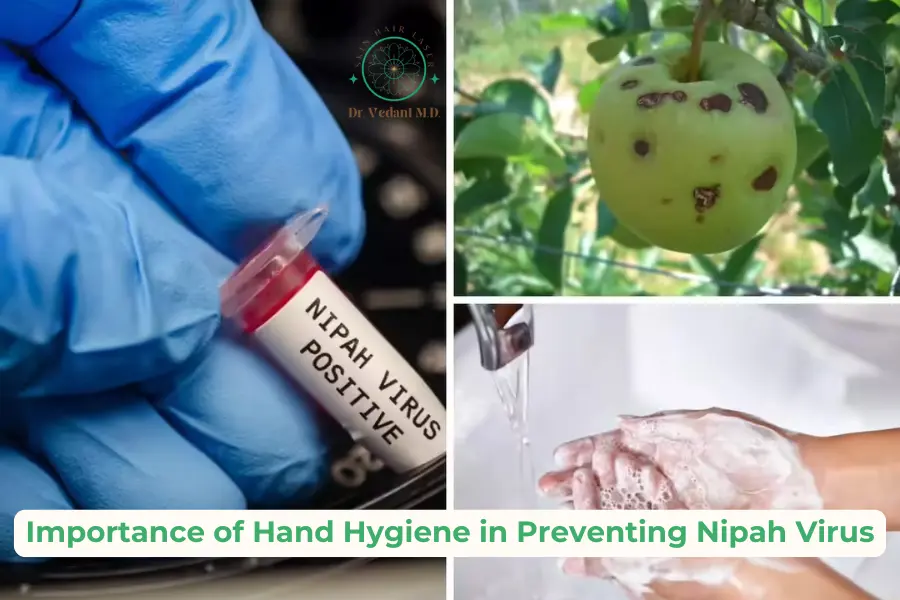
Nipah virus outbreaks have become a major cause for concern from a public health perspective, particularly in certain regions of South Asia and Southeast Asia. Nipah virus is both a zoonotic infectious disease (one that can be shared through animal-to-human transmission) and an emerging infectious disease due to its ability to be transmitted from human-to-human; however, a specific medical treatment or a vaccine is NOT available for the Nipah virus. According to Dr Vedant Ghuse, the top dermatologist near me for skin, the only way to protect against the Nipah Virus is through prevention, specifically, practising proper hand hygiene.
The Nipah virus is primarily transmitted through contact with infected animals (e.g. Fruit Bats and pigs) or eating food contaminated with the Nipah virus. Human-to-human transmission can also occur through direct contact with infected bodily fluids, respiratory droplets, or contaminated surfaces. Infection through contaminated surfaces happens when an individual touches a surface contaminated with the Nipah virus (such as a doorknob, desk, etc.) and then touches their own eye, nose, mouth, or an open wound.
Throughout the course of the day, we put our hands in contact with thousands of surfaces- e.g. door handles, cell phones, bills, public transportation rails, etc, and these surfaces are vessels of transmission for various germs and viruses. Practising proper hand hygiene will:
Dr Vedant Ghuse, a trusted skin specialist in Ghatkopar, explains that for Nipah Virus, where severe respiratory illnesses and encephalitis can occur, hand hygiene is not an option but an absolute necessity.
If you want to help protect yourself from becoming infected with a viral disease such as the Nipah Virus:
Having healthy skin is also very important. Damaged, dry, or chapped skin can provide areas to harbour germs and inhibit proper handwashing.
Frequent handwashing is essential for maintaining proper hygiene and preventing the spread of germs and bacteria. However, if done incorrectly or excessively, you can develop skin problems like dry skin, eczema, or irritation. Keeping your skin healthy is key to ensuring your hand hygiene practices are effective and maintained long-term. By using gentle cleansers and appropriate moisturisers for your hands, you can protect the skin barrier and keep your hands clean.
If you are experiencing any skin problems resulting from frequent handwashing or are seeking assistance from a professional in maintaining your skin during proper hygiene practices, you should consult a qualified dermatologist.
Contact Doctor Vedant Ghuse, a leading skin and hair specialist doctor near me for a consultation and to make sure your skin remains healthy, strong, and resistant to infection. Prevention begins with keeping hands clean and with good skin care.