
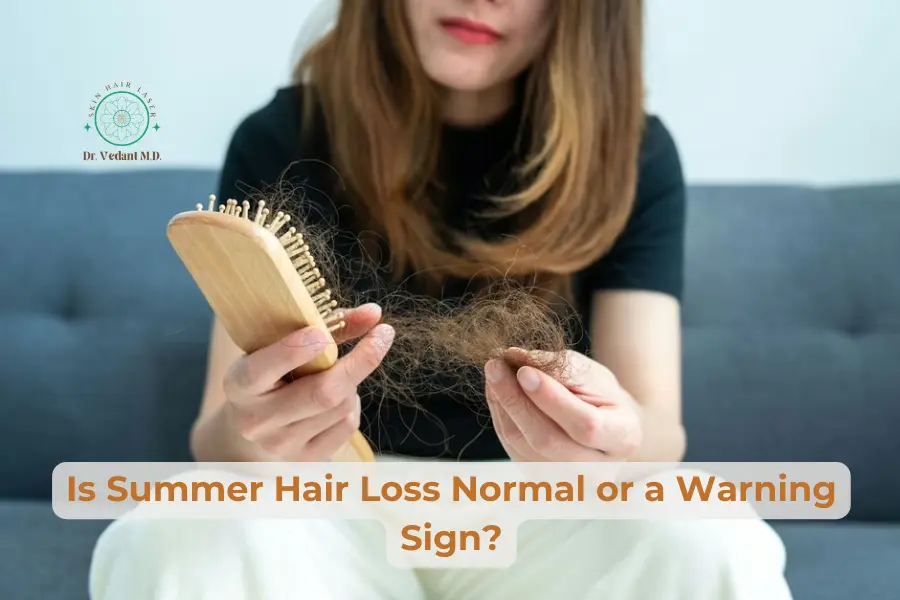
The rising heat during the summer means more hair ends up on our bed pillow, in our hairbrush, or down the shower drain. It is at this point that most people begin to worry if it is normal to lose more hair during the summer or if there is some other underlying issue occurring.
Dr Vedant Ghuse, a leading hair and skin specialist in Ghatkopar, says that hair can normally fall out during the summertime. Each hair on our heads has its own hair "growth cycle," which consists of three distinct stages: the growth (anagen) phase, the resting (telogen) phase, and the shedding (catagen) phase. Due to increases in heat, humidity, and perspiration, the body may shed more hair because of how our environment and temperature relate to hair loss (e.g., heat increases perspiration, and sweating results in more thirst). It has been observed through studies that many people may get several strands of hair every week at the end of spring due to a person's natural "body clock," or what is called "seasonal rhythm.”
However, not all hair loss can be ignored. If you find that you are losing excessively large amounts of hair, or if you start to see thinning areas or patches of hair loss, this could indicate that you need to search for an experienced hair specialist doctor near me and consult the expert for a scalp assessment or for an assessment of your overall health.
The most common reason that people experience increased amounts of hair loss during the warm months of summer is due to damage to the scalp that occurs from sun exposure. The damaging UV rays can wreak havoc on hair, drying out your scalp (causing your hair strands to weaken and fall out), and damaging the hair follicles over time. In addition to the effect that UV rays have on your hair, you may also be sweating more in the summer months, and sweating can create build-up on your scalp. In such cases, the pores can become clogged, which can lead to irritation and dandruff, or the potential for developing a fungal infection that can result in hair loss.
If you swim, then you must understand how the water impacts your hair. Whether swimming in a pool containing chlorine or in salt water on the beach, both can strip your hair of its natural oil, causing it to dry out, become brittle, and be prone to breakage. Plus, being dehydrated when it’s really hot out reduces the nutrients that reach your hair follicles, so your hair is ultimately not as healthy as it should be.
Stress, poor nutrition, hormonal imbalances, thyroid problems, or vitamin deficiencies are also major contributors to hair loss. If you experience sudden hair loss for a period greater than a few weeks and develop an itchy scalp, redness on your scalp, or patches of hair loss, you should search for the best skin and hair specialist near me, and consult the expert for evaluation.
Fortunately, there are many things you can do to manage hair loss related to summer conditions with relatively simple lifestyle changes. Drinking plenty of water, eating protein-rich foods, and protecting your hair from direct sun with hats or other head coverings, as well as good hygiene practices, can help. Additionally, use a gentle shampoo, reduce heat styling, and try using light-weight hair serums and oils to help provide nourishment to your scalp.
One way of protecting your hair from UV rays is by using hats, scarves, etc, when outdoors. If you're swimming often, you should wash your hair immediately after swimming and apply a hydrating/ moisturising conditioner to replenish its moisture.
Seasonal hair shedding is generally thought to be a normal occurrence, but excessive hair shedding should always be brought to the attention of a professional. Looking after both your scalp and general health can help determine whether you are experiencing seasonal hair loss or whether there is a more serious problem causing the issue.
The foundation of having healthy-looking hair starts with the way you treat it; therefore, make sure you are following proper hair care routines! If you think you are experiencing abnormal amounts of hair loss, then it may be beneficial to search for a trusted dermatologist near me, and consult the expert to stop the hair loss from getting worse and to help regain confidence in your hair.