
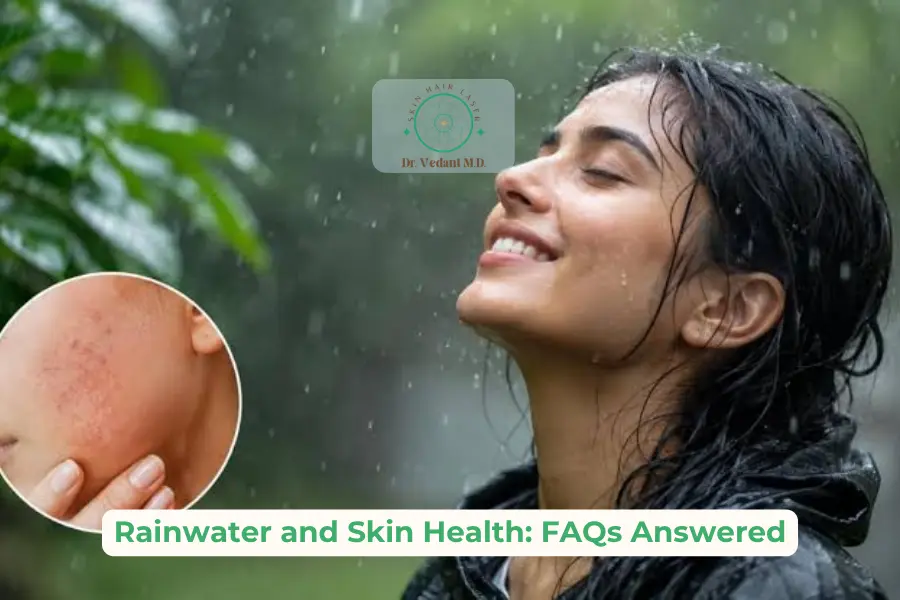
The rainy season brings relief from the sweltering heat; however, the humidity, dampness, and even the rainwater itself may have adverse effects on your skin. Itchiness, irritation, and acne may be some issues you might have to deal with in the rainy season. Knowing how rainwater affects your skin can help you take necessary measures to prevent any complications.
In this blog, Dr Vedant Ghuse, the best skin and hair specialist near me, shares some frequently asked questions about the impact of rainwater on skin.
There is no threat of developing an infection due to contact with rainwater itself. The problem is that rainwater can contain various pollutants, dirt, and even microorganisms. With exposure to such contaminated water, the skin may get irritated or become infected.
The reasons for having itchy skin after being wet in the rain are prolonged moisture, humidity, the presence of pollutants and irritants, as well as staying in wet clothes for a long time, which creates a warm and damp environment for the fungi to thrive.
The climate during the monsoon period promotes fungal infections, as fungi like a warm and moist environment. Dr Vedant Ghuse, the top dermatologist near me, explains that excessive sweating and moist skin can lead to fungal infections such as athlete's foot, ringworm infection, or fungal infections in folds of the skin.
Rainwater is not directly responsible for causing acne. Nevertheless, high humidity and sweating in the monsoon period can lead to sebum production, which in turn can block pores. Dirt and pollution deposited on the skin can trigger acne-prone skin.
Yes. If you get wet in the rain, you may want to wash your face to remove dirt and other impurities that accumulate during rainfall. Do not rub your face harshly, as this will irritate the skin and impair its protective properties.
Get rid of your wet clothes immediately, and dry yourself up properly. Focus especially on places like the armpits, genital area, spaces between your toes, and any other skin folds. Dryness of these areas will protect you from fungal infection.
Yes, humidity, sweat, pollution, and repeated cleansing may irritate sensitive skin. Individuals with sensitive skin or eczema tend to experience redness, irritation, or itching during changes in weather conditions.
Visit a dermatologist when you experience prolonged rashes, itchiness, widespread redness, scaling, swelling, pain in bumps, or fungal infections. Don’t use any steroid or combination-based topical cream without consulting a dermatologist, because such creams might worsen some kinds of infections.
Maintaining healthy skin hygiene can make all the difference during the monsoon season. You must keep your skin clean and dry, quickly change into dry clothes when your clothes get wet, not share your personal towels, and use products that are appropriate for your skin.
However, if you experience any changes in your skin that persistently affect you, you should not overlook them. Instead, you should visit Dr Vedant Ghuse, a leading skin dermatologist near me. Book your dermatology appointment now!