
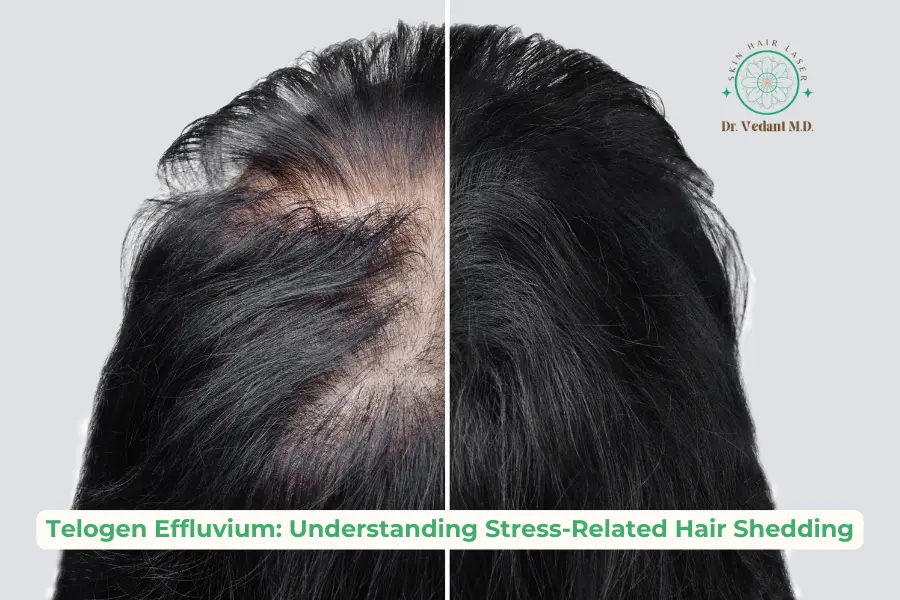
Having large amounts of hair fall all at once can be alarming. One of the main reasons for this type of excessive hair loss is Telogen Effluvium (TE). TE is triggered most often by either physical or emotional stress. Understanding how and why Telogen Effluvium occurs, and the methods available to reduce its effects, can help reduce anxiety and manage the condition effectively. In this blog, Dr Vedant Ghuse, a leading hair specialist doctor near me explains Telogen Effluvium and discusses ways to manage and treat the condition effectively.
Telogen Effluvium is a type of hair loss that is related to the hair growth cycle. The hair grows in three cycles: The Anagen Phase (the active growth phase), The Catagen Phase (the transitional phase), and the Telogen Phase (the resting phase). Hair follows a normal cycle where approximately 85% to 90% of your hair is in the anagen stage of development, and only a small percentage of hair falls out naturally.
In Telogen Effluvium, a larger-than-normal number of hair follicles prematurely move into the telogen phase. Therefore, TE causes an abnormal amount of hair loss over a period of approximately 2 or 3 months after the triggering event. The condition does not occur instantaneously.
Telogen Effluvium is linked to sudden physical or emotional stress. Frequently cited examples of triggers include:
According to Dr Ghuse, a trusted dermatologist doctor near me, Telogen Effluvium can be triggered by more than one factor working together, intensifying hair shedding.
Telogen Effluvium is characterised by widespread loss of hair from the whole scalp rather than just patches of scalp. Patients often experience increased shedding of hair when combing/brushing or upon waking up with hair on pillows or the floor. In general, there will be no evidence of any abnormality on the scalp, such as redness/scaling/scarring, despite having lost a large amount of hair.
Patients suffering from Telogen Effluvium do not have permanent baldness because their hair follicles are still alive and healthy, and thus are capable of growing back once the reason for their illness has been resolved.
A dermatologist will be able to correctly identify Telogen Effluvium through a review of the patient’s medical history and recent circumstances, which caused them to experience excessive shedding of their hair, and may also perform a physical exam. Blood testing to determine if there are insufficient vitamins/minerals or hormonal imbalances in the body that may have led to hair loss could also be performed by the dermatologist.
The most critical step in managing Telogen Effluvium is identifying and treating the factors that are responsible for the patient's developing Telogen Effluvium. Stress reduction strategies, a well-balanced diet that is high in protein, iron, and essential vitamins/minerals, as well as addressing any underlying health conditions are all part of managing Telogen Effluvium.
Gentle methods of taking care of hair by avoiding damaging treatments(heating elements), tight hairstyles, and excessive blow-drying should also be followed. In some cases, dermatologists may recommend using supplements or topical treatments designed to stimulate the growth of new hair.
Hair loss from Telogen Effluvium should start to show signs of improvement around 3-6 months after resolving the stressor associated with it, while full recovery in terms of visible hair growth may be gradual. However, the progress of recovering from hair loss will be somewhat slower than the time experienced in losing it.
Telogen Effluvium can be quite distressing for the person suffering from it. However, because it is transient and only temporary, if you understand the basis for this stress and seek prompt, professional assistance by consulting an expert like Dr Ghuse, the best skin and hair specialist near me, you will be able to regain your hair's health and your peace of mind as well.