As the cool and colourful season of fall approaches, you'll likely notice changes in your skin's condition. Many people struggle with seasonal transitions and experience dry, sensitive, or dull skin. But what about the fall season specifically affects your skin?
The short answer is the skin barrier, which is your body's first line of defence. In this blog, Dr Vedant Ghuse, the best dermatologist near me for skin, explains how skin barrier repair works along with the fall transition specifically, so you can protect and nourish your skin all season long.
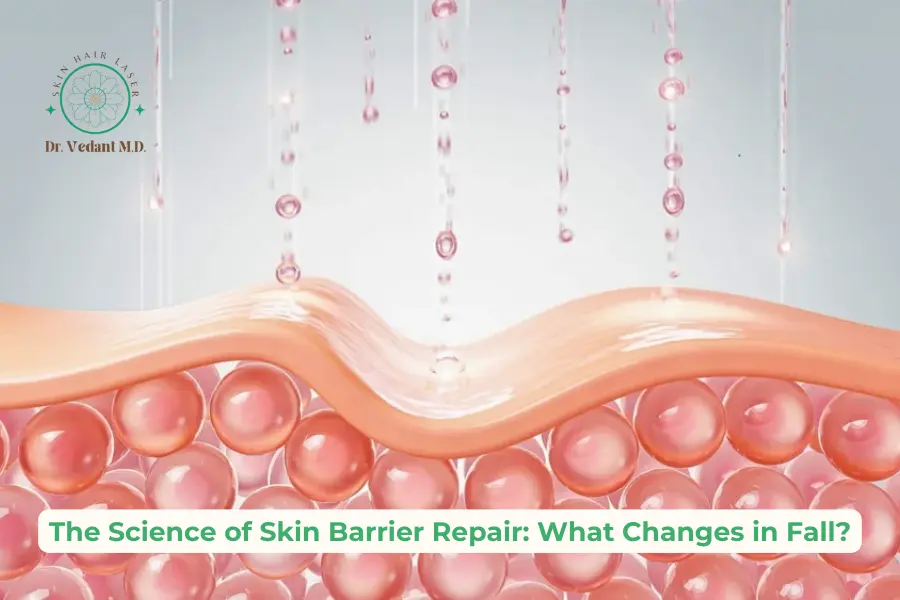
Also known as the stratum corneum, the skin barrier is the outermost layer of your skin. Think of it like a brick wall: the skin cells are like the bricks, and the lipids (including ceramides, cholesterol, and fatty acids) function as the mortar that holds the bricks together.
This barrier serves three main purposes:
When the skin barrier is functioning properly, the skin has a good tone, feels hydrated, and works optimally. When it is compromised, you may experience dryness, redness, flaking, itching, or increased sensitivity, all of which may happen with seasonal transitions.
Fall is a period marked by cooler temperatures, less humidity, and often windy conditions. These environmental changes can strip natural oils and disrupt the integrity of your skin barrier.
Dr Vedant Ghuse, the best skin and hair specialist near me, explains how fall affects your skin on a deeper level:
Here are evidence-based ways to nourish your skin barrier during fall:
Understanding the “why” behind skin barrier repair helps you make more thoughtful skincare choices, especially with seasonal changes like fall. Consistent and supportive care not only helps prevent seasonal flare-ups but also builds a year-round routine that improves long-term skin resilience. To manage your skin health during climate changes and beyond, book an appointment with Dr Vedant Ghuse, a leading dermatologist near me, to get a customised treatment plan tailored to your unique needs.